

Over the past decade, I’ve assembled a document of hundreds of fun historical facts.1 Denmark alternated between kings named Christian and Frederick for over 450 years. Fighting stopped every day during the Easter Rising so a park keeper could feed nearby ducks. When Victor Hugo died, Parisian sex workers took the day off to pay their respects.
My favorite entry takes longer to explain, however. It’s a story of idealistic Scotsmen, a doomed jungle colony, the marriage of long-time rivals, and the foundation of modern economics. We’ve mostly forgotten the lessons of the “Darien scheme”; and it shows in global affairs today.
A Man, a Plan…
For Scotland, the 17th century was characteristically dreadful. At the time, English, French, Spanish, and Dutch colonists were fanning out across the world in search of fantastical riches. But the Scots were boxed out. While Scotland had shared a monarch with England since 1603, its political and economic independence restricted access to the sugar and tobacco flowing from English colonies. Tension with other colonial powers over the course of the 1600s further constrained Scottish trade. A weak currency kept many Scots indigent. And as ever, Scotland was cold, small, isolated, and capital-poor.
The “Seven Lean Years” of the 1690s were particularly awful. Year after year, cold, wet summers rotted Scotland’s oat fields, causing mass starvation. Best estimates suggest that 5 to 15 percent of Scotland’s 1.2 million citizens died nationally over the decade. In regions like Aberdeenshire, closer to a quarter perished. Making matters worse, the Old Scottish Poor Law, an early welfare scheme, was overwhelmed: One contemporary writer reckoned that there were then “two hundred thousand people begging from door to door.” Tens of thousands more emigrated to Ireland or resigned themselves to indentured servanthood overseas.
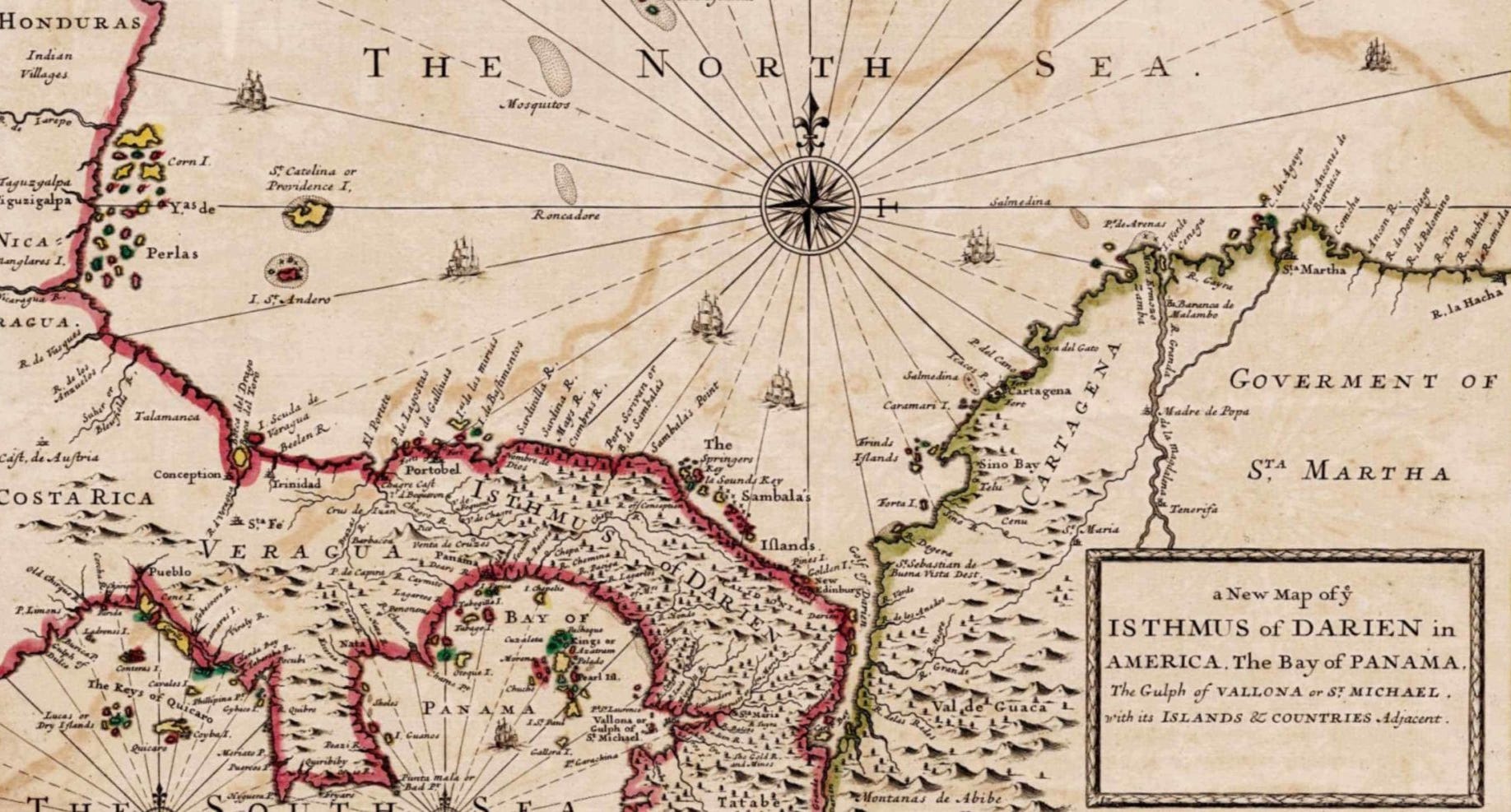
Desperation and ambition tend to go together. So in 1695, when a banker named William Paterson pitched Scottish elites on a daring venture — a national colony at Darien, on the Isthmus of Panama — he found a receptive audience.
The logic was seductive. Paterson wanted to take advantage of the fact that the Americas are cinched around the waist. Where just a few dozen miles separate the Atlantic and Pacific, he reasoned, a trading entrepôt could transport goods across the continent and slash the time and cost of global shipping. Panama would be the “door of the seas, and the key of the universe,” Paterson later wrote. It was the same rationale that justified construction of the Panama Canal two centuries later.
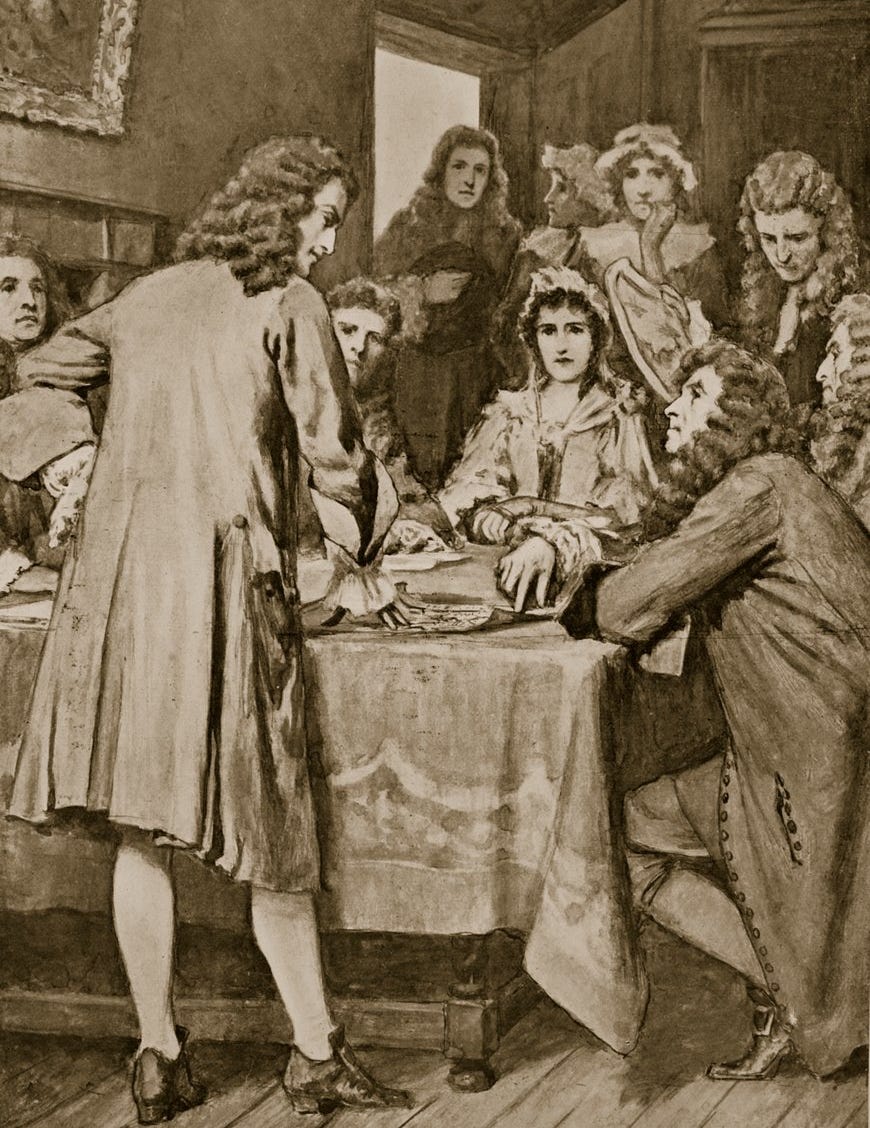
The Scots were smitten: Here, at last, was their chance at empire. The Scottish Parliament chartered the Darien Company later the same year, planning to raise money in London and Hamburg. Then, when the English East India Company and Parliament leaned hard on financiers in both cities (fearing the competition of a Scottish venture), a defiant and patriotic Scottish public stepped in. Within a year, citizens of all ranks had pledged £400,000 sterling in the project — between a quarter and a half of all liquid capital in Scotland at the time, and nearly two and a half times the total value of annual exports.
Today, you may know the Darién Gap as the swampiest and most treacherous leg of a migrant’s journey to North America. At the time, however, neither the Scottish public nor the scheme’s organizers appreciated just how unforgiving the region could be. Instead, songs, pamphlets, and sermons about Darien conjured a fertile land of fruit and gold. The roughly 1,200 colonists were jubilant when they left Leith in July 1698, the dreams of a nation in tow.
The Best-Laid Plans
The first settlers made landfall about four months later. Within months, three crises had pushed the colony to the brink.
First, the colonists had packed poorly. Their salted meats had spoiled before being unloaded. Their hardtack and grain were decimated by weevils, maggots, and rats. And the heavy woolen cloth, wigs, stockings, and heavy leather shoes the colonists hoped to trade with locals and nearby Europeans, so prized in the Lowlands, were useless in the tropics.
Second, disease tore through the colony. When Americans landed in Panama in the early 1900s, they had ways to treat illness and limit the mosquito population. Before germ theory and modern medicine, however, the Isthmus of Panama would have ranked among the most dangerous places on the planet. Many settlers had no previous exposure to mosquito-borne illness. Worse, by crowding into dense, humid settlements, the Scots had unknowingly created ideal conditions for diseases like dysentery. Contemporary accounts documented how “fevers and fluxes” at one point incapacitated over a sixth of the population, causing hundreds of deaths.
Third, Darien was a bad neighborhood. The indigenous population helped the ailing settlers where they could. But the Spanish, who claimed Darien as their own, blockaded the colony and launched periodic attacks. And English King William, unwilling to provoke Spain amid high tensions with France, prohibited nearby English colonies from rendering aid to the Scots.
After about eight months, the survivors fled. But word didn’t reach Scotland fast enough to stop another voyage of some 1,300 people. When that expedition arrived in late 1699, the settlers found the colony deserted. Though they tried to rebuild over the winter, a Spanish siege derailed the second attempt even sooner than the first.
Of the approximately 2,500 Scots who sailed for Darien across the two expeditions, about 2,000 died. Perhaps just as devastating for small, impoverished Scotland: £153,000 sterling, or about 40% of the public’s pledged investment, was gone.
The Cost of Deliverance
In Scotland, the catastrophe generated a range of negative emotions. Grief was common. Rage, too: The colonists’ own king had denied them assistance? But many Scots simply felt exhausted. Their poverty and their isolation from the global economy weren’t in spite of their independence, but because of it. Maybe a reunion with England, long debated, was the best way forward after all.
The English had troubles of their own at the time. In 1702, the childless Queen Anne took the throne. Recognizing a potential succession crisis, the Scottish Parliament threatened to make their next monarch a French-backed Stuart if England didn’t offer more favorable trade terms. In response, the English Parliament passed the 1705 Alien Act: Unless Scotland accepted succession or entered union negotiations, England would embargo Scotland’s primary exports and treat all Scots in England as foreigners.
Hardly the foundation for a lasting marriage, you’d think. But it worked. The following year, negotiators agreed to unite England and Scotland in exchange for more favorable economic treatment. One provision gave Scots “full freedom and intercourse of trade and navigation” throughout England and its colonies, the prize that had inspired the Scots to go to Darien in the first place. Another provision paid off Scotland’s public debts and repaid the shareholders of the Company of Scotland with 5 percent interest. The Darien scheme’s investors would be made whole.
Nevertheless, the draft treaty was highly controversial in Scotland. Riots broke out in major cities. Public petitions delivered to public officials were overwhelmingly negative.2 And in the Scottish Parliament, John Hamilton rose to deliver a speech that mourned the death of something old, and big, and familial: “I see our ancient mother Caledonia, like Caesar, sitting in the midst of our senate, ruefully looking round about her, covering herself with her royal garment, attending the fatal blow, and breathing out her last with an ‘Et tu quoque mi fili.’”
But Scotland’s economic woes carried the day. On January 16, 1707, the Scottish Parliament ratified the treaty, 110 to 69. On March 25, it adjourned itself out of existence. Finally, on May 1 — after over 800 years of Scottish independence — the Kingdom of Great Britain came into being. To mark the occasion, the bell-ringer at St Giles’ Cathedral played a traditional folk song for Edinburgh, and for all the world: “Why Should I Be so Sad on My Wedding Day?”
The Road to Riches
For a generation, the Union of England and Scotland was more pain than gain. The trade benefits took years to materialize; the taxes kicked in more quickly. Jacobite risings repeatedly threatened to put a Stuart back on the throne.
Then, slowly, the benefits of integration revealed themselves.
Financial institutions were an early success. The body created to administer British payments under the Acts of Union evolved into the Royal Bank of Scotland, which then went head-to-head with the older Bank of Scotland. That competition soon developed into one of the most elaborate banking systems in eighteenth-century Europe, and delivered an array of new and sophisticated financial instruments. One example: The cash credit, an early form of overdraft, allowed small merchants and tradesmen borrow against their reputations and kept money flowing.
The tobacco industry also blazed. When trade with American colonies became legal, Glaswegians discovered that they could get to Chesapeake weeks faster than merchants from London or Bristol. A new class of “Tobacco Lords” began buying Virginia and Maryland leaf on credit, before re-exporting it to continental Europe. By the 1760s, the region around Glasgow was trading more tobacco than every town in England — combined.
In the decades that followed, Scotland’s broader economy came alive, too. Tobacco money flowed through Scottish banks and into a wide array of businesses, like sugar houses, tanneries, ropeworks, ironworks, and printfields. Scottish linen production more than tripled between the 1720s and 1770s. Agricultural improvements and ambitious infrastructure projects, like the Forth and Clyde Canal, helped mold the land for public use. And Scots joined British bureaucracies like the army and East India Company in droves, becoming lucrative (if deeply morally objectionable) middle managers of empire.
You can even see the Acts of Union in the architecture of Edinburgh. The area now known as the “Old Town” was the city that existed before 1707. Hemmed in for centuries by walls and pungent loch, the Old Town still feels cramped to this day. Tenements once climbed up to fourteen stories high. Narrow, winding alleys slice through town. And though the Old Town has cleaned up recently, for centuries it was dark, dank, sooty, and foul. Hence the nickname “Auld Reekie”: Old Smoky.

In the generations after the Union, however, wealthy residents who’d seen London could no longer tolerate life in the warren. So between the 1760s and 1850s, bureaucrats began work on a new district. Edinburgh didn’t need the protection of city walls anymore; it needed an architectural plan fit for the Age of Enlightenment. The “New Town”, with its airy, rectilinear streets and imposing Georgian buildings, was the result.

Scotland’s social, economic, and infrastructural transformation can’t be attributed solely to the Acts of Union. The country’s high literacy rates, Protestant ethic, and proximity to continental Europe no doubt contributed, too. Still, such a transformation would have been utterly unimaginable in the 1690s.
Two Men in the Athens of the North
I still haven’t mentioned perhaps the greatest legacy of the Union: Its contributions to modern economic thought.
In 1711, four years after the Acts of Union, David Hume was born. Having grown up in (and with) Edinburgh, Hume marveled at Scotland’s social evolution. In a 1757 letter, he asked a friend: “Is it not strange that, at a time when we have lost our Princes, our Parliaments, our independent Government, … we shou’d really be the People most distinguish’d for Literature in Europe?” Likewise, in 1758’s “Of the Jealousy of Trade”, Hume dismissed the zero-sum mercantilist position that a country could prosper only at another’s expense. Trade is an opportunity, he argued; a rich neighbor is a customer. Hume even kept a list of “Scotticisms” to purge from his prose, for fear of sounding provincial.
Then there was Adam Smith, born to a Scottish customs officer in 1723. Smith also lived in Edinburgh,3 and appreciated how the removal of national and economic boundaries had made Scotland richer. But as he acknowledged in 1760, the case for the Union would have been dubious at the outset:
The Union was a measure from which infinite Good has been derived to this country. The Prospect of such good, however, must then have appeared very remote and uncertain. The immediate effect of it was to hurt the interest of every single order of men in the country.
In that sense, The Wealth of Nations might be understood as a love letter to Scotland’s economic integration. When Smith suggested that division of labor works better in larger markets in the long run, he was also telling Scottish history — and the history of his youth. In fact, Smith cited Scotland dozens of times in his opus. He seemed especially fixated on Scottish merchants who’d entered international markets, bypassing aristocrats and local lairds in the process.
Hume and Smith were close friends. They’d have wandered past construction together in Edinburgh, witnessing economic growth beyond their grandparents’ wildest dreams. Maybe that’s why they wrote so much on international peace and commerce, and so little on national identity.
Can you blame them?
For Auld Lang Syne
As the Acts of Union suggest, many of the greatest developments in history have required us to tear down artificial barriers and enlarge markets. Consider a few examples from the 20th century. Export-oriented industrialization consistently outperforms import substitution. The humble shipping container transformed international trade and logistics. WTO membership accelerated China’s economic growth, likely lifting tens of millions out of poverty. And the borderless internet, for all its faults, is virtually indistinguishable from magic.
Nevertheless, nationalism and xenophobia are on the rise around the world today. The 2020s have been a decade of institutional skepticism, trade wars, reactionary politics, and interstate conflict. But even in the best of times, the international community has rarely even considered interstate merger. Over 130 countries have come into being since 1900. Over the same period, the list of large countries that have achieved peaceful, lasting unification begins, and ends, with Germany. Things fall apart.
Even in Scotland, national identity frequently prevails over economic self-interest. A generation after Hume and Smith, Robert Burns wrote some pretty damning poetry about the men who negotiated the Union: “We’re bought and sold for English gold — Such a parcel of rogues in a nation!” More recently, nearly 45 percent of Scots voted for separation in 2014. The struggle for independence continues to this day.
One problem with globalization is that its benefits are usually delayed or lopsided. Even the Union generated winners and losers. Highlanders were subsequently evicted to make room for livestock. Edinburgh’s New Town contributed to socioeconomic stratification. Compensatory policies like trade adjustment assistance can help in some circumstances, but even short-term economic hardship is hard for a proud people to swallow.
The other, deeper, problem is that national belonging and control are often more alluring than long-term social wellbeing. The Darien scheme and Scotland’s other economic challenges were so obviously devastating that they couldn’t be ignored. Far more often, however, national mythologies harm the public in subtler ways. International institutions have no answer to “America First”.
In part, I think that’s why I’m so fond of the Acts of Union: They remind me of what could be. A nation’s leaders rose above parochial interests, defied the doubters, and did something truly great for future generations, once. It wasn’t so long ago.
I, too, wonder why I didn’t have a girlfriend in high school.
Daniel Defoe, not yet famous as the author of Robinson Crusoe, worked in Scotland as a secret agent to gin up support for the Union. He didn’t seem to hold Scots in particularly high esteem: “I confess ’tis the easiest thing in the world to hire people here to betray their friends.”
I once saw a transcendent one-man show about the life of Andrew Carnegie in Adam Smith’s attic, followed by some of the worst standup imaginable. Only at the Edinburgh Fringe.